later post | index | earlier post
What is classed as commercial waste?
Monday, 20 October 2025
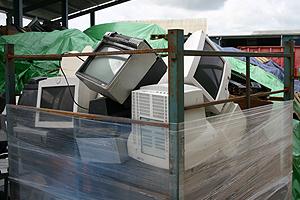
Commercial or business waste is any waste derived from a business premises that is used predominantly for trade, entertainment, recreation or any kind of commercial activity. It is different to industrial or household waste.
Commercial and trade waste also incorporates refuse created following gardening and building work on a residential property, providing the individual undertaking the work is not the homeowner.
There are strict regulations in place for disposing of commercial waste.
Examples of commercial waste
Commercial waste includes the following:
General waste
- Paper, cardboard, packaging materials, non-recyclable plastics
Recyclable waste
- Paper and cardboard
- Plastic
- Glass
- Metal
Food waste
- Waste food from restaurants, cafes, venues and other premises that produce food
Hazardous waste
- Chemicals, medical items
Electronic waste (WEEE)
- End of life electronic equipment, eg. computers, TVs, radios, white goods
Textile waste
- Clothing and fabrics
Construction waste
- All forms of hardcore (concrete, bricks), metals, ceramics, masonry
Green waste
- Agricultural waste, eg. vegetation, grass cuttings, turf, soil
What isn’t classed as business waste?
There are two main types of waste that are not considered business waste.
- Industrial waste – waste generated from manufacturing or any complex industrial process that does not have recyclable potential
- Household waste – waste produced from private individuals which can either be recycled or disposed of at public refuse points
Your responsibility as a business owner
As a business owner, it is your legal responsibility to ensure that all commercial waste is handled and disposed of properly. You are required to comply with the Environmental Protection Act 1990’s Duty of Care legislation, which stipulates how commercial or business waste should be stored, transported, disposed of and recorded.
You must ensure that the business disposing of your waste is an authorised waster carrier. All companies licenced to carry or accept commercial waste are listed on the Environment Agency’s Public Registers. ASM Metal Recycling is listed under Waste Carriers, Brokers and Dealers.
If you wish to dispose of your own commercial or business waste you are required to register as a waste carrier wherever you live in the UK.
If trade waste can be recycled, it should be transported to a licensed commercial recycling centre. Commercial hazardous waste must be disposed of safely and by an authorised waste carrier.
Storing commercial waste
The Duty of Care legislation states you must store commercial waste securely on-site in labelled containers that protect it from being contaminated with the wider environment or being disturbed by animals. Waste should be separated and categorised, and the containers should not be overflowing.
Disposing of commercial waste
Commercial waste can only be collected, transported and disposed of by a licensed waste carrier at an approved disposal or recycling site. A waste transfer note is required for each consignment of commercial waste; businesses that regularly have commercial waste collected can maintain a ‘season ticket’, which covers waste collections for up to a year. Waste transfer notes should be kept for up to two years, and shown to enforcement officers if required.
Choose ASM as your commercial waste carrier
Aside from storing your commercial waste correctly, you also need a business you can rely on to collect and transport your waste to an approved site for disposal or recycling. At ASM Metal Recycling we’re not only licensed waste carriers – we are also registered to accept hazardous waste. Get in touch with ASM today and find out more about our commercial waste recycling services.
later post | index | earlier post
Recent posts
- 4 top tips for businesses undergoing a site clearance
- What is commercial waste?
- What are different metals used for?
- What to do with radioactive scrap metal
- How does metal recycling benefit the economy and the environment?
- 5 common metals that can be recycled
- How does metal recycling work?
- How to Sort Metal for Scrap
- How to classify the different types of waste your business produces
- What is WEEE waste?
- Can iron be recycled in the UK?
- What has the most copper in it to scrap?
- How to better understand scrap metal pricing
- Is there a link between copper and brass prices?
- How to make money from cable scrap